
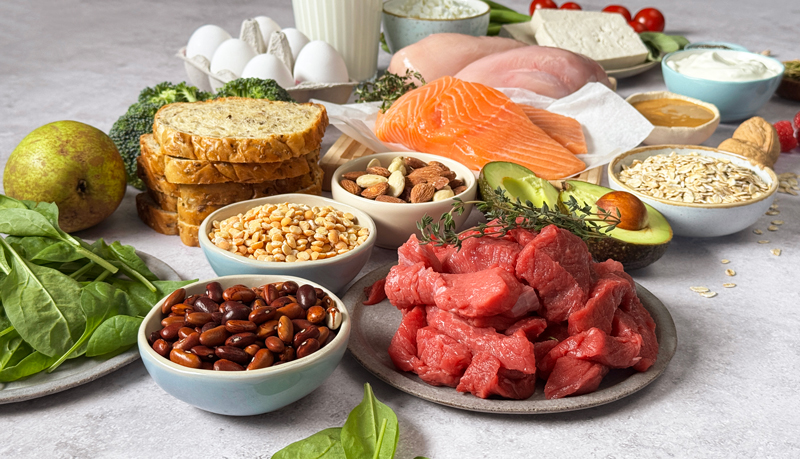
The High-Protein Trend Is Everywhere
Protein gets a lot of attention. It is all over grocery aisles, food labels, protein bars, shakes, and social media feeds. Some days it feels like everything is shouting, “Now with more protein!” Protein is important, of course. Your body needs it to build and repair tissue, support muscles, and keep you feeling satisfied. But for most people, protein is not the missing piece.
The Rings Fill the Biggest Gaps
That is why protein is not one of the MedChefs Rings. Our Rings focus on the foods and nutrients most people do not get enough of: fruits, vegetables, whole grains, legumes, fiber, nuts, seeds, and fish. These foods support heart health, gut health, blood sugar control, weight management, and long-term disease prevention. In other words, the Rings are designed to help fill the biggest gaps.
Some People Do Need More
There are people who truly need more protein. Professional and serious amateur athletes may need more because of intense training, not just weekend-warrior workouts. Older adults with muscle loss, called sarcopenia, may need extra support. People healing from wounds, surgery, or illness may also need more protein to repair tissue. In those cases, protein matters a lot and should be personalized.
More Protein Is Not Always Better
But for many people, the bigger problem is not low protein. The bigger problem is replacing fiber-rich, plant-rich foods with high-protein foods that do not bring the same benefits. If every meal becomes mostly meat, cheese, protein bars, or shakes, there would be less room for beans, lentils, vegetables, fruit, oats, barley, nuts, and seeds. That tradeoff can work against weight, cholesterol, blood pressure, blood sugar, and overall health.
The Source Matters, Too
The source of protein matters, too. Chasing protein is not a green light to eat huge amounts of meat. Beans, lentils, tofu, tempeh, fish, nuts, seeds, plain yogurt, cottage cheese, eggs, poultry, and smaller portions of meat can all provide protein. The goal is to choose protein in a way that supports the whole plate, not take it over like the loudest person at the dinner table.
Muscle Needs a Signal
There is also a big myth about muscle. Eating protein alone does not magically build muscle. If it did, we would all be flexing after a turkey sandwich. Muscle building is stimulated by resistance training, like lifting weights, using bands, bodyweight exercises, or other strength work. Protein helps with repair and rebuilding, but the workout is the signal. Without that signal, extra protein does not automatically become extra muscle.
Protein Is Not a Magic Cape
Extra protein does not automatically get used as muscle just because it sounds healthy. If we eat more calories than our body needs, even from protein, that extra energy can be stored as fat. Protein is helpful, but it is not a free pass. It is one part of a healthy meal, not a magic cape.
Build the Plate Around the Rings
At MedChefs, we are not anti-protein. We are pro-balance. Most meals can include satisfying protein, but at MedChefs, we build the plate around the foods that close your Rings: vegetables, fruits, beans, lentils, whole grains, nuts, seeds, and fish. The goal is not to chase the most protein possible. The goal is to build meals that support your whole body.
Protein Has a Place
So no, protein does not need its own Ring. It already has a place on the plate. The Rings are here to help you focus on the nutrients most people need more of, not the ones the media already talks about all day long.